By Colby Kultgen
Overthinking the Best, the Cost of Playing It Safe, and Urge Surfing
Read online / Read time: 4 minutes
Hello friends!
We're back with your weekly dose of 1% Better.
The newsletter where I share my 5 favorite ideas, lessons, and discoveries of the week.
Let's get right to it!
A question I'm kind of obsessed with
If you can overthink the worst, why can't you overthink the best?
Genuinely though, why can't we?
I know our caveman brains are pretty much hard-wired to seek out danger.
And while that used to mean worrying about getting eaten by a saber-tooth, now it means worrying we're going to say something stupid on a Teams meeting.
Very useful. Thanks, brain.
So while it’s difficult to fight our nature, here are a few ways I’ve found to make my brain default to optimism a little more often:
- Remember you're doing it for the story. When I’m worried about something going badly, I try to remind myself that even the worst-case scenario might make a pretty good story later. It’s a surprisingly effective way to take some of the fear out of things.
- Curate your feeds. I’ve recently realized how triggering my X feed is, so I’ve started being way more diligent about muting and unfollowing accounts that push negativity. Highly recommend.
- Keep track of what goes better than expected. I’ve started paying more attention to the things I was worried about that ended up being completely fine. Building up a bank of evidence I can pull from when I’m in a similar situation again.
An eye-opening tweet about risk
This chart is such a good visual for something we tend to forget:
Playing it safe has a cost too.
We’re very aware of what we might lose by taking a risk. We spend a lot less time thinking about what we might lose by not taking any.
A smart risk usually has a few things going for it:
- The downside would suck, but you’d recover.
- The upside could meaningfully change your life.
- The decision is reversible, or at least gives you another move afterward.
- Even if it fails, you’ll learn something useful.
Basically, you want bets where being wrong is manageable and being right is meaningful.
I love the angle this article takes.
Most advice around this basically says: consume less and create more.
But consumption is inevitable. And if you’re a creator, it’s often where your ideas come from in the first place.
The bigger issue is how we’re consuming.
This article introduces the idea of “slow media consumption.”
Instead of racing through everything, you bring a bit more intention to what you consume and actually do something with it afterward.
A few ideas I liked:
- After reading something, close it and write down what you remember.
- Finish an article you’re reading before opening any more tabs.
- Watch a movie without your phone anywhere near you.
- At the end of a podcast, pick one idea you actually want to use that week.
- Spend a few minutes with one piece of art instead of trying to see the entire museum.
- Consume something with a friend, then actually talk about it afterward.
Note: This doesn't mean every piece of media needs to become homework. The idea is just to consume a bit more mindfully
A skill I think everyone should learn
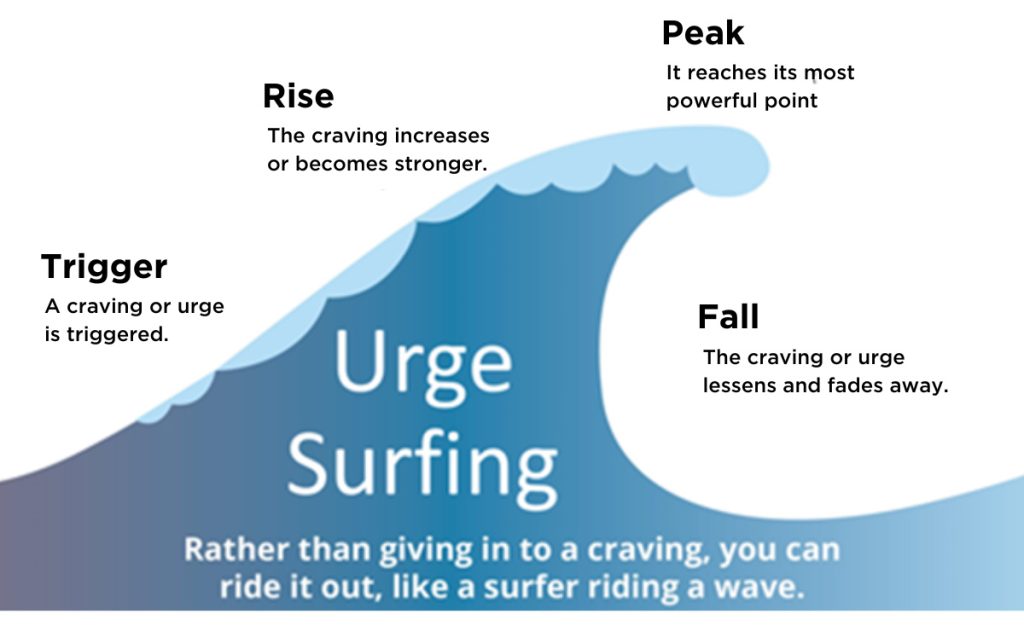
I recently learned about the term "urge surfing" (from my therapist actually).
When an urge hits, it can feel like an itch you have to scratch.
And I think we assume that if we don’t scratch it, we’re just going to sit there feeling uncomfortable until we eventually give in.
But an urge isn’t a line that keeps climbing. It’s a wave. It rises, peaks, and falls on its own, often much sooner than you think, as long as you don’t keep feeding it.
That’s what I’ve found helpful to remember: you don’t have to make the urge disappear. You just have to give it enough time to pass.
A tweet that made me laugh
A few more things I'm into this week:
📸 Photos that blew my mind: The 2026 iPhone Photography Awards winners
🔬 Study worth reading: Personality traits are less stable than people think
🎷 Website I think is neat: Train Jazz
💭 Quote I'm keeping in mind:
"I think the most beautiful souls are the ones that remain gentle after everything they have survived. They have every reason to become cold, yet they still choose kindness, still choose love, still believe people can be better."
Have a great week!
— Colby